Showing posts with label The Times of India. Show all posts

Thursday, May 27, 2021

Covid and the bureaucracy: India needs modern institutions that are autonomous, accountable and creditworthy

The events of the past month have been so tragic, so unspeakably ugly that the only rational response was to pretend it wasn’t happening. The raging second wave of the virus revealed not only the governmental ineptitude but also exposed India’s soft underbelly – our heavy bureaucratic system, which wasn’t nimble enough to cope with the crisis.

Even more damning was the reminder of how this system fails us daily to deliver basic public goods – justice, health, education, water, electricity etc – which is why India is sometimes called a ‘flailing state’. BJP promised in 2014 to change all this via ‘maximum governance, minimum government’. It hasn’t done so. But it still has a chance.

Uday Deb

Covid will be gone one day. But the citizen’s day-to-day misery, coping with rotten institutions, will remain. If BJP wants to redeem some of its lost shine before 2024, it must focus on reforming some of our shoddiest institutions. Before Covid 2 struck, the FM had proposed an inspiring Union Budget that focussed on job-creating growth via infrastructure spending. Joe Biden, the US president, followed suit with a similar strategy in his stimulus package. Both recognised the best road to recovery from the Covid crisis was infrastructure investment, which is a multiplier, stimulating the private sector to invest, creating jobs, boosting consumption.

Unfortunately, infrastructure spending in India doesn’t deliver the full bang because it is executed via leaky government departments that focus on hardware – where kickbacks are available. Thus we get more roads, pipes, wires, buses. But water pipes don’t ensure 24×7 water supply; electric wires don’t mean reliable electricity; buses don’t create an effective transport system.

India needs modern, effective utilities that are autonomous, accountable, and creditworthy. Successful countries have created such institutions. We too have excellent examples at home to emulate. There is Delhi’s Metro in city transport; Concor in moving freight containers; Energy Efficiency Services Limited (EESL) in driving the nation’s switch to LED lighting; electricity companies in Delhi, Kolkata and Mumbai; and Shimla Jal Prabandhan Nigam Limited (SJPNL) for water and sanitation.

Shimla’s story is astonishing. The popular hill station was no different from most Indian cities in its water woes. You were in the shower and the tap would go dry; or washing dirty dishes, it always chose the worst moment. You scrambled to get a tanker. When the tanker got delayed, there was another scramble, sometimes even a riot. In the summer of 2018, Shimla’s woes hit a peak: You got water only once a week. A jaundice epidemic broke out, tourists ran away, hotels closed, business down on its knees. It felt like a ghost town.

Up against a wall, the municipal corporation acted with staggering wisdom.  It set up an autonomous utility company to manage both water and sewerage, accountable to citizens for service and to outside lenders for financing. It replaced leaky pipes; upgraded old pumps that lifted water thousands of feet from river valleys; established higher pay-for-what-you-use tariffs, monitored by meters; subsidised the poor via a ‘lifeline slab’ of cheap water; brainwashed consumers on how to save water and water bills. It made the same dramatic turnaround in sewerage. Soon, Shimla achieved the unbelievable:  24×7 continuous water in all three test wards and much enhanced water supply, clean sanitation throughout the city.

Tourists and businesses came running back. Shimla topped the most liveable small city index. The secret of Shimla’s success was a dramatic change in governance. Instead of managing water and sanitation via myriad government departments, the town created a modern utility with an autonomous CEO; he didn’t allow water to be stolen (as much as a third had been stolen earlier) because he was insulated from political pressure and had to remain creditworthy for future financing.

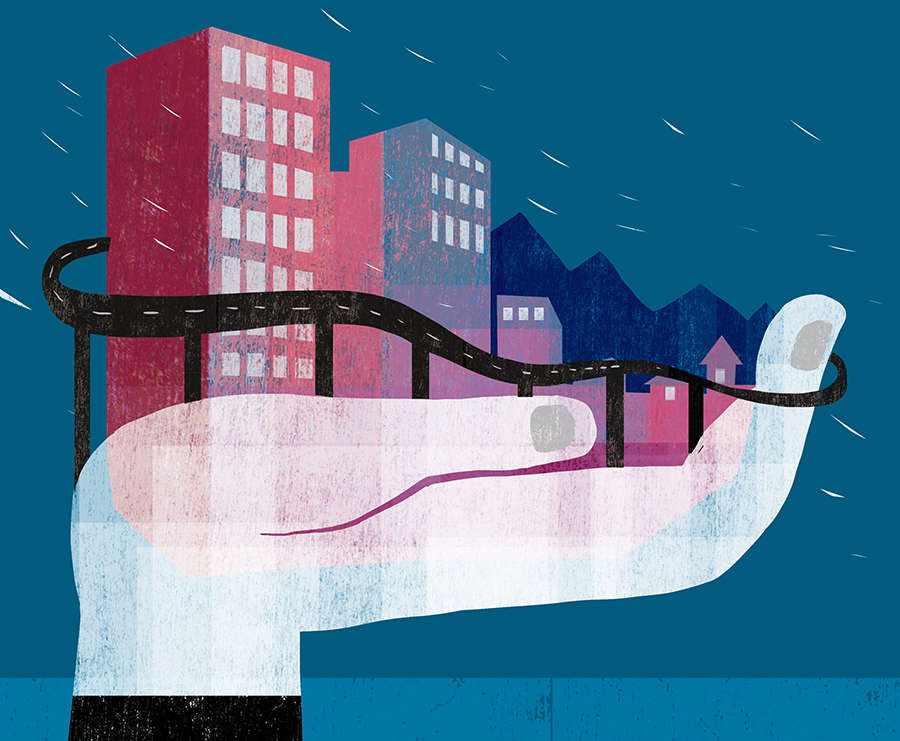
India needs such institutions to manage its infrastructure – its electricity, ports, highways, even healthcare. Whether these institutions are publicly or privately owned or public-private partnerships doesn’t matter. The key is that they should be autonomous, with a firewall against meddling by politicians and bureaucrats.

The FM’s mantra should be ‘Don’t fix the pipes; fix the institutions that will fix the pipes.’ She should make her infrastructure largesse conditional to such institutional reform. She should not fund specific projects but fund effective, accountable utilities like SJPNL to execute the projects. Her reward will be the absence of government departments standing at her door with a begging bowl. Being creditworthy, the utilities will leverage domestic and global financial markets; they will float bonds, tapping long-term finance. Thus, India will deepen its bond market.

Who will be losers in this reform? Bureaucrats, politicians, and unions – a formidable interest group! Politicians won’t be able to give away free electricity to farmers. Bureaucracy, in any case, is allergic to reform – it’s a cunning survivor and will do anything to preserve its power. Since employees of the modern utilities will have to adopt a new work ethic, it will send the unions into the trenches. All three vested interests will be ready to do battle. It won’t be easy.

Luckily, people will be on the reformer’s side: the prospect of 24×7 water and 24×7 electricity is nirvana in India. The lesson from recent agricultural reforms is that you must carry the people in a democracy. So, the smart reformer must sell the reforms before doing them, get the people on his side. Finally, it may seem odd to be reforming in this horrific Covid crisis, but reforms generally happen in a crisis. So, don’t waste this crisis, prime minister! 

Source: Times of India

Sunday, April 25, 2021

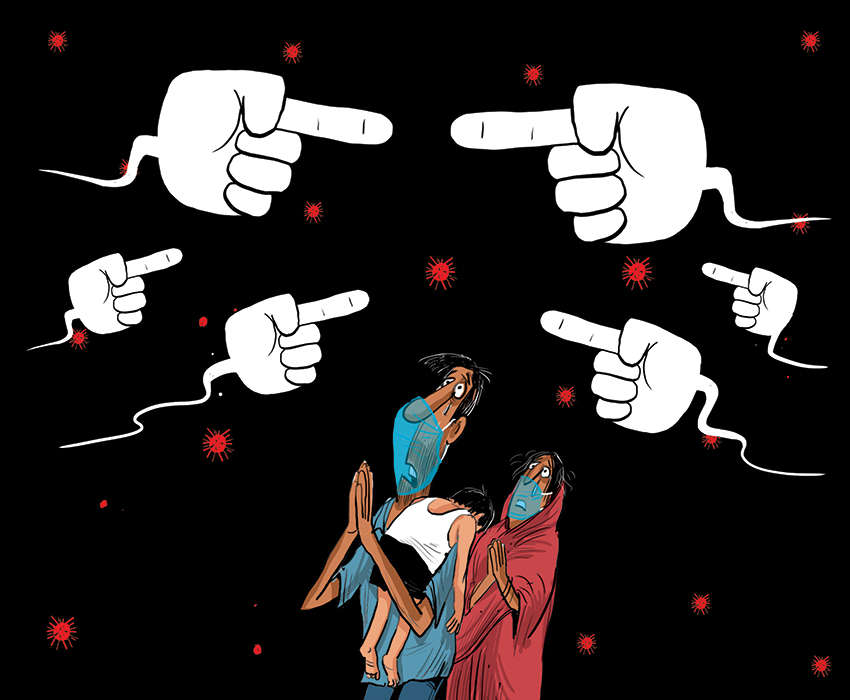
Can Covid shift our politics? It’s a national emergency now. Let it bring to an end our Age of Hatred

 The Times of India | April 2021 

The dreaded second wave of the coronavirus has created a national emergency. You’d think it would have united our republic, but India remains hopelessly divided. A straightforward problem of vaccinating our people becomes the subject of political football. While aam admi scrambles helplessly from hospital to hospital in search of oxygen, a bed, a ventilator, our political parties behave like prehistoric tribes, fighting elections as though they are battles for extinction. They don’t even share a common vocabulary to empathise in this Age of Hatred.

A curious political drama unfolded in four acts last week. The background was a sudden realisation that India, the world’s largest producer and exporter of vaccines, faced a grave shortage of Covid vaccine. The state hadn’t contracted in advance, nor offered a price that would have incentivised vaccine makers to build sufficient capacity. It hadn’t learnt from past mistakes.

In the first month of Covid, government had restricted testing to state laboratories. The infection was spreading, government labs couldn’t cope, India was repeatedly cited for testing failure. Realising its mistake, the government liberalised. It allowed in the private sector and testing took off via many competitive services, including home visits by skilled professionals, monitored by an excellent app.

This lesson was forgotten in the vaccination strategy. Early on, the state should have trusted private hospitals, resident associations, companies and NGOs to implement a vigorous vaccination programme via dual pricing – free vaccine for the poor at government hospitals and a market price at private hospitals, where people are willing to pay for healthcare. Vaccine makers would thus have recovered lost profit from supplying to the state.

Illustration: Uday Deb

The first act of the drama opened on April 18 when former PM Manmohan Singh wrote a sensible letter to PM Narendra Modi, suggesting ways to ramp up the vaccination programme. His plan included placing immediate orders backed by funds to vaccine producers; allowing the import of vaccines cleared by credible authorities abroad without insisting on Indian trials; and giving the states greater supply and freedom to decide whom to vaccinate.

In the second act, Singh’s well-meaning letter provoked an uncharacteristic rant from the Union health minister Harsh Vardhan, who accused the Congress of contributing to the second Covid wave by creating irresponsible hesitancy of the public against the vaccine in some Congress-ruled states. He said that while shaming the vaccines publicly, Congress leaders “took their doses in private, quietly”. Whatever the truth, this was not the place or the way to say it.

The third act in the drama was Centre’s dramatic announcement on April 19 of a significant change in the vaccination strategy. Given the relentless surge in infections, the government accelerated its vaccination programme; reversing its earlier strategy, it liberalised its stance to the private sector, allowing half the vaccines to be sold at market price, and giving greater flexibility to the states. Many of Singh’s suggestions, already under evaluation for weeks, were part of the new strategy.

In the fourth act vaccine manufacturers responded quickly, promising rapid gains in capacity, bringing down dramatically the time to vaccinate India’s population. Rahul Gandhi attacked the policy for “no free vaccines for 18-45 year olds, middlemen brought in without price controls”. Sonia Gandhi termed it “brazen profiteering from misery”. The policy set off a vigorous debate in the media. The curtain came down on the drama when Bengal CM Mamata Banerjee blamed Modi for manufacturing the second Covid wave to win the Bengal election.

What lessons can we draw from this drama? Harsh Vardhan is a soft-spoken, likeable man. His sarcastic reply to Singh points to a deeper disease in the polity. Democracy accepts differences and disagreement but under the basic rules of cooperation. Today, there is such rage, hatred among opponents, it’s an uncivil war. Mamata’s bizarre remark makes sense only if you believe the Bengal election is a battle for extinction. Until recently, politicians didn’t think of election defeats as permanent; the loser went on to fight the next election.

A second lesson: India’s politicians may have divided the republic but they remain united in an excessive faith in the ability of the state. They distrust private citizens, private enterprises, private NGOs. Had they trusted society and the market, the initial testing and vaccinating strategies would have been more sensible. Instead they trusted the bureaucracy, which has let them down in the second wave. It could have simply co-opted the army, set up mega Covid centres in stadiums, and avoided the panic and the tragedy. Congress’s response to the vaccine strategy was, of course, typically statist in its ignorance and contempt for the private sector.

Three, those who believe India is no longer free, ought to have witnessed last week’s exuberant debate on the vaccine policy. It was not only Congress, but criticism came in abundance from economists, policy wonks, and of course, the argumentative Indian went berserk on social media. These are not signs of an unfree country.

Four, Harsh Vardhan’s unfortunate reply was also defensive. Because BJP has long been the object of condescension by the old elite, it harbours deep resentment. Congress has been in power so long, it has an unconscious belief in its own superiority. With noblesse oblige, it treats BJP contemptuously as the nouveau riche.

The end result is a faultline defined by a lack of mutual respect. Eradicating contempt is a bit like trying to save a failing marriage. But when the nation is at stake, it is the people who suffer. And indeed, they are suffering in these dreadful Covid times in an Age of Hatred.

Source: Times of India

Monday, November 28, 2016

Ten ways to save demonetisation and stop the economy from choking

After almost three weeks of demonetisation, there is visible pain in the lives of ordinary people, a noticeable slowdown in economic activity, and reports of job losses in many sectors. The economy may contract by as much as two percentage points over the next two quarters — a colossal loss in national wealth. However, there can be no rollback. The gains from a cleaner, whiter economy are far bigger in the long run. Here’s how Narendra Modi can save demonetisation.

1) Speed is of the essence. Don’t depend only on our own printing presses to replenish the cash; subcontract the currency presses of friendly governments whose security levels are unimpeachable. Fly in the new notes and flood the system. The priority is to restore liquidity in the market so people can get on with their lives.

2) Extend the income disclosure scheme. True, the last amnesty scheme was only a modest success, but after the stick recently wielded by Modi, a little carrot might work better now. Demonetisation has given rise to new currency brokers who are converting the old notes at 30 to 40% discount. Since government is threatening more action against black money such as scrutiny of benami land titles, people will be more inclined to convert their black to white via an amnesty scheme — say at a 50% tax rate rather than the 60% it is considering — rather than convert old black money to new black money via a broker.

Some may opt to disclose their black money as ‘current income’ and get away by legally paying around 35% tax; this too should be welcomed. Another alternative is to offer low-yielding, long-term bonds that would convert black to white; the government would gain by getting money cheaply. The purpose is to diminish the fear in the most productive groups in society that create most of the jobs. Don’t demonize them: this is not a dharmayuddha. The objective is to change old, ingrained habits for the betterment of society.

3) End harassment. Law-abiding citizens will happily pay tax if they believe they will be respectfully treated by income-tax officials. People need to be reassured that they can file returns online today; pay tax online; and get refund online. The computer decides, not the ITO, which returns are to be scrutinized. Modi needs to mount a major campaign to reassure people about this reduction in official discretion. He needs to also severely punish any tax official caught harassing a taxpayer.

4) Put black to use. Offer a significant fiscal stimulus to the economy from the notes not likely to be exchanged, black money that will disappear forever. Spending this non-inflationary money — an estimated Rs 3 lakh crore — on infrastructure and housing can create masses of jobs and mitigate some of the jobs lost in demonetisation.

5) Focus on real estate. Demonetisation will not stop the corruption that creates black money. For this you have to attack its underlying sources. In real estate, every step is mired in corruption — from buying land to getting approvals. Black money is also the result of excessive stamp duty. For this reason, Vijay Kelkar had recommended merging stamp duty into GST in his pioneering report on GST. That may be too late but we must keeping fighting for sensible taxes and clean titles in land.

6) Roll back the customs duty on gold. Smuggling of gold declined in India when import restrictions were lifted after 1991. A decent white business developed in gold and jewellery. In 2013, there was a setback when customs duty on gold was reintroduced. Cash payments became common again because smuggled gold was cheaper.

7) Reform the silly curbs on legitimate election donations to candidates. This has led to the use of black money in elections. I do not favour state funding, where my hard-earned taxes would finance candidates and family dynasties I despise. Instead we should follow the best practices in the US and Europe in funding elections.

8) Reform the bureaucracy. Black money is generated because of administrative discretion. A good place to begin reform is to implement Justice Srikrishna’s draft Indian Financial Code.

9) Do not attempt to end black money. People should not break the law but we should overlook small transgressions, just like we ignore pedestrians who cross on a red light. Cash lubricates the system and a cashless society is the road to dictatorship.
 
10) Don’t touch the aam aadmi’s tender. Finally, the next time you want to demonetise, flood the market first with 5,000 and 10,000-rupee notes; once the black money has moved up to these higher notes, demonetise only the Rs 5,000 and Rs 10,000 notes. Spare the aam aadmi.

Sunday, November 13, 2016

When netas see votes in clean air, they’ll cut through the smog

Two apparently unrelated events occured in Delhi in the past few days. In the first, Narendra Modi made a tough, risky move — one of the riskiest in his career — against the long-festering problem of black money. In the second, Arvind Kejriwal was seen floundering as he tried to cope with Delhi’s foul air. What connects the two events is the stark contrast between the decisive action in the case of black money and a sense of helplessness in response to pollution. The dissimilar behaviours of the two politicans are explained by the Theory of Public Choice, enunciated by the American economist, James Buchanan, which won him the Nobel Prize in 1986.

At some point in his political career, Modi realised that there are votes in fighting against black money. He made an election promise, and after a series of other steps, he acted last Tuesday to withdraw high-value notes from the market. It was a risky move. It would bring huge pain to the aam aadmi before it brought gains to the economy. It would disrupt trade, slow down business activity in real estate, the largest employer in the nation. It would alienate the political establishment, including his own party, diminishing their ability to fight the next election. But if Modi manages to contain these risks, he would deal a body blow to black money, tipping India towards a clean, white economy. And in the 2019 election he might even be rewarded for it.

Arvind Kejriwal has been unable to see the electoral possibilities in providing clean, healthy air. He lost an opportunity two years ago when World Health Organisation declared Delhi as the world’s most polluted city. There was panic at the time with an upsurge in respiratory complaints; tourists cancelled bookings and diplomats refused to accept postings to India. But Kejriwal frittered away that political moment. Perhaps, he thought that his core constituency of migrant poor was indifferent to pollution. Or he was daunted by the challenge. After all, there is no single pollutant in this case. Road dust, construction, waste burning, vehicle emission, diesel generators, power plants — all these factors play a role. Then there are nasty jurisdiction problems with multiple agencies to cope with. Even the Supreme Court had not succeeded. In the end, he probably concluded that it was wiser to focus his resources on priorities that had a better chance of accomplishment.

Buchanan’s concept of Public Choice throws light on Kejriwal’s dilemma. Many of us are familiar with market failures, but few know about his systematic theory of government failure. We tend to have a romantic view of public officials, believing that they act altruistically in the public interest. Public Choice teaches that politicians and civil servants are just as self-interested as you and I, and they look out primarily for themselves. While Modi and Kejriwal may feel passionately about the common good, their driving force is their own interest — their re-election to begin with.

The key is how do we channel the self-interest of politicians and officials to our desire for clean air? Generally, ministers in a vast democracy operate under the influence of vested interests that are generous in their contributions to the minister’s election campaign. A small lobbying group with a narrow focus always has this advantage over dispersed and disorganised individuals who want clean air but have no voice. How can these individuals come together and persuade their politicians that there are votes in clean air?

One doesn’t know if Modi will succeed in fighting black money. Demonetisation is only one step in a prolonged campaign. But the lesson for those who want clean air is to bring public pressure on politicians so that the subject gets on the national agenda. It is not Delhi’s problem alone, and it not fair to dump it all on Kejriwal. Many Indian cities face this problem. Narendra Modi will have to get involved. It will also not be easy to raise consciousness because of political apathy.

The air improved slightly last week and the subject quickly disappeared from the media and the public imagination. However, the winter is upon us and Delhi’s air will soon become foul, and people will again begin to scream. Success will depend on institutionalising individual screams into a collective scream in order to awaken the political class to the possibility of votes in cleaning up the air.